You’re next in line at Chipotle. The smell of grilled chicken and cilantro rice is already making your mouth water. And then the person behind the counter asks the question that somehow always catches you off guard:
“Black beans or pinto beans?”
You pause. You look at both. They both look good. You kind of just guess and move on.
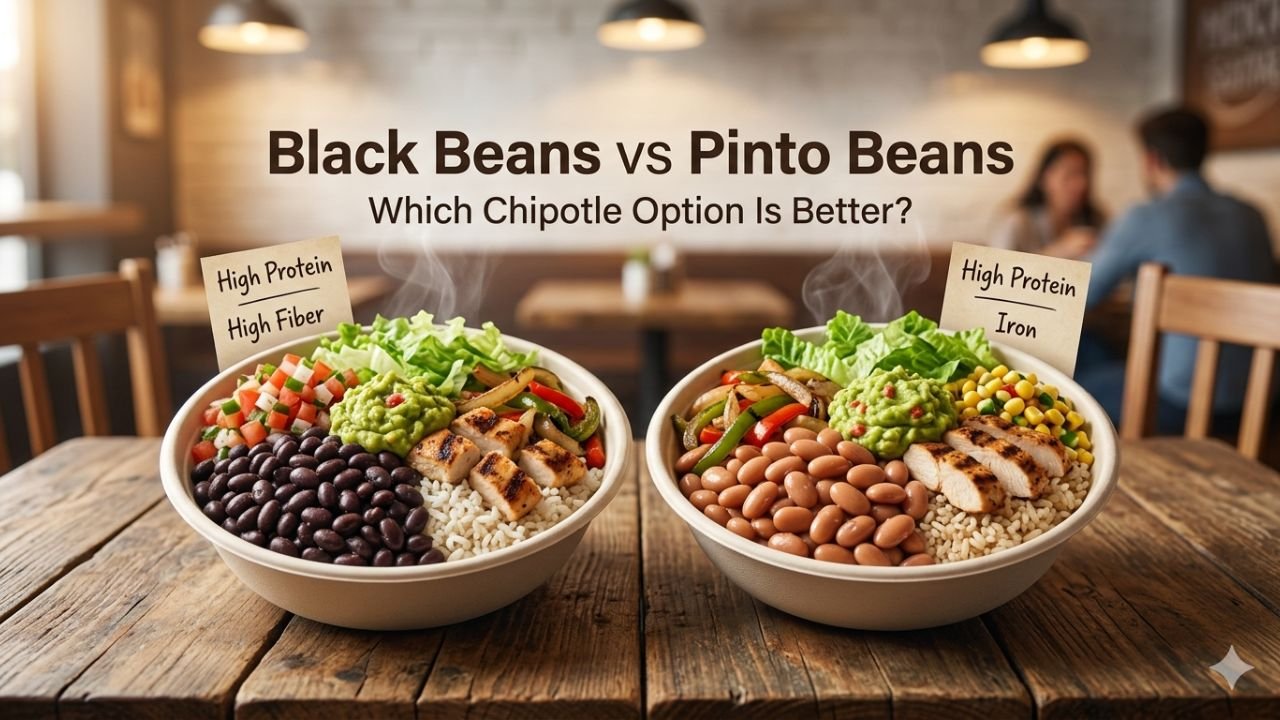
But here’s the thing: small choices actually matter more than most people realize. Whether you’re eating at Chipotle for the taste, the protein, the fiber, or because you’re trying to eat a little healthier, the bean you pick can make a real difference.
So today, we’re breaking it all down. Chipotle black beans vs pinto beans: nutrition, taste, texture, and which one actually suits your goals better. By the end of this post, you’ll never have to guess again.
See how your bean choice affects a full burrito with the Chipotle burrito calories calculator.
First, Let’s Talk About What’s Actually in Chipotle’s Beans
Before we compare, it’s worth knowing that Chipotle prepares its beans in-house. They’re not just opening a can and dumping it in; both the black beans and pinto beans are slow-cooked with real ingredients.
Chipotle’s black beans are cooked with onions, chipotle peppers, garlic, rice bran oil, cumin, and lemon juice.
Chipotle’s pinto beans are cooked with onions, chipotle peppers, garlic, rice bran oil, cumin, and oregano.
So yes, both are flavorful. Both are seasoned. And both are vegetarian-friendly (which a lot of people don’t realize).
Now let’s get into the real stuff.
See how your bean choice affects your full meal — plug it into the Chipotle bowl calories calculator for a complete breakdown.
Chipotle Black Beans vs Pinto Beans: The Nutrition Breakdown
Here’s where it gets interesting. The differences are small, but depending on your health goals, they can actually matter.
Calories
Per serving (about 4 oz/half cup):
- Black beans: ~130 calories
- Pinto beans: ~130 calories
Almost identical. Neither one is going to blow your calorie budget. So if you’re just watching your total intake, you’re good with either option.
Protein
- Black beans: ~8 grams of protein
- Pinto beans: ~8 grams of protein
Again, pretty much neck and neck. Both are solid plant-based protein sources, which is great news if you’re a vegetarian or just trying to eat less meat.
Fiber
This is where things start to shift slightly:
- Black beans: ~8–9 grams of fiber
- Pinto beans: ~6–7 grams of fiber
Black beans pull ahead here. Fiber is a big deal. It keeps you full, supports digestion, helps regulate blood sugar, and is great for gut health overall. If you’re always hungry an hour after eating, the extra fiber in black beans might actually help you feel more satisfied.
Carbohydrates
- Black beans: ~22 grams of carbs
- Pinto beans: ~23 grams of carbs
Very close. Both are complex carbohydrates, meaning they digest slowly and give you steady energy rather than a quick spike and crash. Neither one is “bad” for you in terms of carb quality.
Fat
- Black beans: ~3 grams
- Pinto beans: ~3 grams
Both are very low in fat. The small amount of fat comes mostly from the rice bran oil used in cooking.
Sodium
- Black beans: ~310 mg
- Pinto beans: ~340 mg
Pinto beans are slightly higher in sodium. Not a huge difference, but if you’re watching your salt intake, say, because of blood pressure concerns, black beans have a small advantage here.
Iron and Antioxidants
Black beans contain a good amount of iron and are well-known for their high antioxidant content. Those deep, dark colors you see in black beans? That comes from anthocyanins, the same compounds found in blueberries. These antioxidants are linked to reduced inflammation and better heart health.
Pinto beans also have antioxidants, but black beans generally contain more.
Taste and Texture: The Real Reason Most People Choose
Okay, let’s be honest. Most of us aren’t standing at the Chipotle counter running protein calculations in our heads. We’re choosing based on what tastes good. So here’s a real breakdown of how they feel and taste.
Black Beans at Chipotle
Black beans have a firmer texture. They hold their shape well and have a slightly earthy, almost savory flavor. They work really well in burrito bowls where you want some bite and texture in each forkful. If you’re pairing with bold toppings like salsa verde, corn, or jalapeños, black beans hold up and don’t get lost in the mix.
Pinto Beans at Chipotle
Pinto beans are softer and creamier. They have a milder, slightly nutty flavor and tend to blend into the dish more naturally. If you’re getting a burrito, pinto beans can actually work better because they meld with the other ingredients rather than sitting separately. They’re also a little heartier, which some people find more “comforting.”
Think of it this way: black beans are the bold friend who stands out, and pinto beans are the easygoing one who gets along with everyone.
Which Bean Is Better for Your Health Goals?
Let’s get practical. Depending on what you’re going for, here’s which bean might serve you better.
If You Want to Lose Weight or Stay Full Longer
Go with black beans. The slightly higher fiber content means you’ll feel fuller for longer. When you’re trying to cut back on portions or avoid snacking an hour after lunch, fiber is your best friend.
If You’re Watching Sodium
Go with black beans. They have a little less sodium, which matters if you’re managing blood pressure or following a heart-healthy diet.
If You Want More Antioxidants
Go with black beans. Their dark color is a sign of higher antioxidant activity. If long-term health and inflammation reduction are your goals, they have the edge.
If You’re Focused on Digestive Comfort
Pinto beans might be gentler. Some people find that black beans cause a bit more gas or bloating (yes, we’re going there; it’s a real concern for a lot of people). Pinto beans are often easier to digest for those with sensitive stomachs.
If You’re Building a Burrito
Try pinto beans. Their softer, creamier texture makes every bite feel more unified. They mix beautifully with sour cream, cheese, and rice inside a wrap.
If You’re Eating a Bowl
Black beans work great. They stay firm and create a nice contrast with softer toppings like guacamole and sour cream.
Practical Tips for Ordering at Chipotle (Like a Pro)
You’re already making a smart choice by eating beans at all. Here are some tips to make your meal even better:
- Double up on beans. Both black and pinto beans are nutritional powerhouses. Asking for a double portion (sometimes free, sometimes a small charge) dramatically boosts your fiber and protein.
- Skip the rice if you want lower carbs. Beans already provide complex carbs. If you’re watching your carb intake, choose beans as your main base.
- Add fajita veggies. They’re free at Chipotle and add vitamins, volume, and flavor without many extra calories.
- Choose sofritas or chicken to pair with beans. Both options keep your meal high in protein without getting too heavy on saturated fat.
- Go easy on the cheese and sour cream. These are where the hidden calories tend to pile up. The beans themselves are quite light.
- If you’re vegan or vegetarian, know that both Chipotle’s black beans and pinto beans are vegan-friendly. They’re one of the cleanest protein options on the menu.
A Real-Life Example: Two Friends, Two Bowls
Let me paint you a picture.
Two friends go to Chipotle together. Both get a burrito bowl with brown rice, lettuce, corn salsa, and guacamole.
Friend A picks black beans. Gets more fiber, slightly fewer calories, and more antioxidants. Feels full for hours and skips the afternoon snack.
Friend B picks pinto beans. Gets a slightly creamier texture, a milder flavor, and an equally protein-rich meal. Also feels great and finds the beans easier on their stomach.
Both made excellent choices. Neither one was wrong. The difference is small in the grand scheme of a meal, but knowing what you’re choosing helps you feel more in control of what you’re eating. And that matters.
Can You Get Both? Yes, Actually.
Here’s a little Chipotle hack: you can ask for a mix of both black beans and pinto beans. Just ask for half and half when you’re at the counter. You get the best of both worlds: the fiber and antioxidants of black beans with the creamy texture of pinto beans.
Most Chipotle locations will do this with no problem. It’s one of those quiet little hacks that makes your meal both more nutritious and more interesting.
Frequently Asked Questions
Are Chipotle’s beans healthy?
Yes, absolutely. Both black beans and pinto beans at Chipotle are a great source of plant-based protein, fiber, and complex carbohydrates. They’re low in fat and free from artificial preservatives. They’re one of the healthiest items on the entire Chipotle menu.
Which has more protein: black beans or pinto beans at Chipotle?
They’re essentially equal; both offer around 8 grams of protein per serving. Neither one has a significant advantage in terms of protein content.
Are Chipotle beans vegan?
Yes! Both the black beans and pinto beans at Chipotle are vegan and vegetarian. They’re cooked with plant-based ingredients and contain no meat or animal by-products.
Which is better for diabetics, black beans or pinto beans?
Both are low on the glycemic index and are good options for blood sugar management. However, black beans have slightly more fiber, which may help with blood sugar regulation. Always consult your doctor or dietitian for personalized advice.
Do Chipotle beans contain gluten?
No, Chipotle’s beans are naturally gluten-free. However, cross-contamination is always possible in a shared kitchen, so if you have celiac disease, it’s worth asking about their preparation practices.
Conclusion
Next time you’re in line at Chipotle, you’ll know exactly what you’re getting with each option. The black bean vs pinto bean decision doesn’t have to be a mystery anymore.
Black beans are slightly ahead in fiber and antioxidants. Pinto beans are a little creamier and easier on some stomachs. Both give you great protein, complex carbs, and a genuinely nutritious addition to your meal.
And if you’re ever still unsure? Just ask for both. Life’s too short to pick just one bean.
Want to see exactly how your bean choice affects the full meal? Run the numbers with our Chipotle Nutrition Calculator.