Let’s be honest. When you walk into Chipotle, you’re not thinking about sodium. You’re thinking about that perfectly grilled chicken, those warm tortillas, and whether you should get guac even though it’s extra (you should, obviously). But here’s the thing — that delicious burrito you just inhaled? It might have just handed you an entire day’s worth of salt in one sitting.
And no, this isn’t a “stop eating Chipotle” article. We love Chipotle. But if you’ve been trying to watch your blood pressure, manage your heart health, or just make smarter food choices, understanding Chipotle’s sodium levels is genuinely important.
The sneaky part? It’s not always what you think. People blame the chips. People blame the salsa. But the real sodium villains at Chipotle are hiding in some pretty surprising places. Let’s break it all down so you can still enjoy your favorite bowl without going overboard.
Why Chipotle Sodium Levels Actually Matter
Before we name names, let’s quickly talk about why sodium matters in the first place.
The American Heart Association recommends no more than 2,300 mg of sodium per day for most adults and ideally closer to 1,500 mg if you’re watching your heart health. Now here’s the kicker: a single Chipotle burrito can easily clock in at 2,000 mg or more. That’s nearly an entire day’s allowance wrapped in a flour tortilla.
Too much sodium over time can raise your blood pressure, strain your kidneys, cause water retention, and increase your risk of heart disease and stroke. It’s not about one meal ruining your health; it’s about patterns. And if you’re eating Chipotle a few times a week without paying attention, those sodium numbers add up fast.
The good news? Once you know which ingredients are doing the most damage, you can make easy swaps without sacrificing flavor. That’s exactly what this post is here for.
The Biggest Sodium Offenders at Chipotle
The Flour Tortilla The Silent Sodium Starter
Most people don’t even think about the tortilla. It’s just the wrapper, right? Wrong.
A standard Chipotle flour tortilla contains around 620–690 mg of sodium. That’s before you’ve added a single topping. You haven’t even gotten to the counter yet, and you’re already one-third of the way through your daily sodium budget.
Corn tortillas, on the other hand, are a much lighter option, usually around 30–60 mg of sodium. That’s a massive difference. If you’re making a burrito bowl instead of a wrapped burrito, you skip the tortilla entirely and immediately reduce your sodium intake by a significant chunk.
Practical tip: Switching from a flour tortilla burrito to a bowl is one of the single easiest and most impactful changes you can make.
The Meat’s Protein Comes With a Sodium Price
This one surprises a lot of people. Yes, the proteins at Chipotle contain significant amounts of sodium, because they’re seasoned and marinated before cooking.
Here’s a rough breakdown of Chipotle’s protein options by sodium content:
- Steak: approximately 310–350 mg
- Chicken: approximately 310–360 mg
- Carnitas: approximately 380–430 mg
- Barbacoa: approximately 530–570 mg
- Sofritas (tofu): approximately 370–420 mg
Barbacoa is by far the highest-sodium protein on the menu. It’s slow-cooked with chipotle peppers, cumin, cloves, and other bold seasonings, which is why it tastes incredible, but also why it comes loaded with salt.
If you’re trying to reduce Chipotle’s sodium, chicken or steak is your best bet among the proteins. They’re still seasoned well but sit at a noticeably lower sodium range than barbacoa or carnitas.
The Rice Yes, Even Rice Has Sodium Here
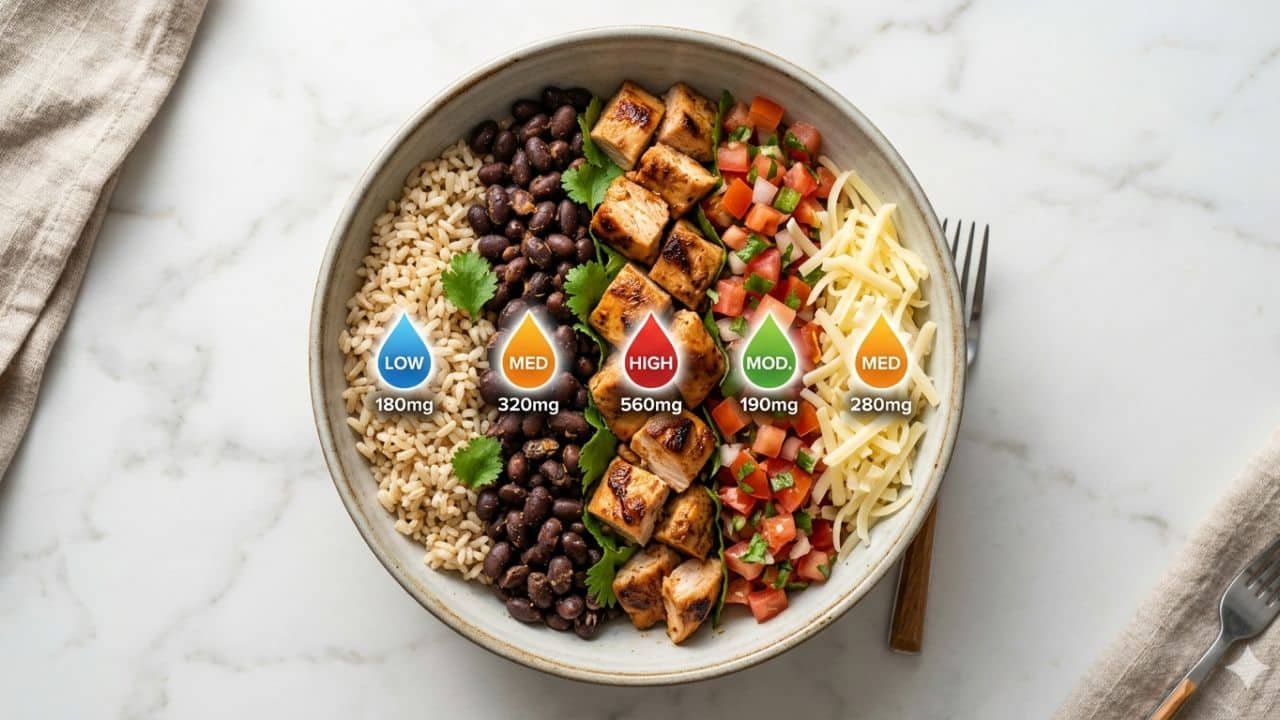
White or brown rice at Chipotle isn’t just plain steamed rice. It’s cooked with lime juice, cilantro, and — you guessed it salt. Chipotle’s cilantro-lime rice typically contains around 150–210 mg of sodium per serving.
It’s not the biggest offender on the menu, but it adds up when it’s sitting alongside everything else in your bowl. If you’re building a high-sodium combination already, asking for less rice or opting for a lighter rice portion can help.
The Beans Not as Innocent as They Look
Beans are healthy. Beans are fiber-rich. Beans are also seasoned at Chipotle, so they carry sodium, too.
- Black beans: approximately 120–200 mg per serving
- Pinto beans: approximately 200–250 mg per serving
The pinto beans tend to run a bit higher in sodium than black beans, so if you’re trying to keep things lower, go for black beans. Or skip them entirely if you’re already getting protein from meat, though beans do add great nutritional value with fiber and plant-based protein.
The Real Sodium Bombs: Cheese, Sour Cream, and Salsas
Now we’re getting to the real spike territory. This is where Chipotle’s sodium levels can go from “okay” to “whoa” very quickly.
Cheese
Chipotle uses shredded Monterey Jack cheese. It’s delicious. It’s also around 120–170 mg of sodium per serving. Not outrageous on its own, but remember — it’s all cumulative.
Sour Cream
Sour cream clocks in at around 30–50 mg, which is actually pretty mild. This one’s not the problem.
Salsas Here’s Where It Gets Real
This is where people get blindsided. The salsas at Chipotle are flavor-packed because they’re salt-heavy:
- Fresh tomato salsa (mild): approximately 470–540 mg
- Tomatillo green chili salsa (medium): approximately 230–280 mg
- Tomatillo red chili salsa (hot): approximately 510–560 mg
- Corn salsa: approximately 210–270 mg
The fresh tomato salsa and the red tomatillo salsa are the biggest sodium hitters in the salsa category. People drizzle these on without a second thought, not realizing they’re adding another 500 mg of sodium to their meal.
If you want flavor with less sodium, the corn salsa or tomatillo green salsa are better options.
Chips, Guac, and Queso Worth Knowing
Chips
Chipotle’s chips are seasoned with salt and lime. A regular order of chips contains roughly 420–500 mg of sodium. Not terrible for a full chip serving, but something to factor in if you’re having them as a side.
Guacamole
Guac is surprisingly reasonable, with around 200–230 mg of sodium for a serving. Considering how nutrient-dense avocados are (healthy fats, potassium, fiber), this is one addition that’s easy to feel good about.
Queso Blanco
The queso, on the other hand, is a bigger sodium hit, roughly 490–550 mg per serving. If you’re already getting salsa and cheese in your bowl, adding queso on top can push your total sodium significantly higher.
How to Build a Lower-Sodium Chipotle Meal
Here’s the practical part you’ve been waiting for. You don’t have to give up Chipotle. You just have to build smarter. Here are some real-life strategies:
Go for a bowl instead of a burrito.o Ditching the flour tortilla immediately saves you 600+ mg of sodium. This is the single biggest swap you can make.
Choose chicken or steak over barbecue. oa Save yourself 150–200 mg right there.
Pick corn salsa or green tomatillo over red or fresh tomato salsa. Another 200–300 mg saved without giving up flavor entirely.
Skip the queso if you already have cheese. You don’t need both. Choose one.
Ask for lighter portions of salty topping.s Chipotle staff are generally happy to accommodate lighter portions. Just ask.
Load up on lettuce and fajita veggies. These add volume, crunch, and flavor with very little sodium. More filling, less salt.
Use the Chipotle app’s nutrition calculator. Seriously, the Chipotle website and app let you build your meal and see the nutritional breakdown in real time before you order. It takes two minutes and makes a huge difference.
A “lower-sodium” Chipotle bowl might look like this: Bowl base, brown rice (lighter portion), black beans, chicken, tomatillo green salsa, fresh guac, lettuce. That combination can bring you in around 1,000–1,200 mg, a big improvement from the 2,000+ mg burrito.
A Real-Life Example
Say you order: flour tortilla burrito + barbacoa + pinto beans + white rice + fresh tomato salsa + cheese + queso.
That’s roughly: 670 + 550 + 240 + 200 + 510 + 150 + 520 = approximately 2,840 mg of sodium. In one meal. Before you’ve had breakfast or dinner.
Now compare that to: burrito bowl + chicken + black beans + brown rice + corn salsa + guac + lettuce.
That’s roughly: 0 + 330 + 160 + 190 + 240 + 220 + 5 = approximately 1,145 mg. Same satisfying Chipotle experience. Less than half the sodium.
Small choices, big difference.
Frequently Asked Questions
Is Chipotle actually high in sodium compared to other fast food?
Yes and no. Chipotle tends to be healthier than most fast food chains overall, but sodium levels can still get very high depending on what you order. The advantage is that Chipotle’s ingredients are fresher, and you have a lot of control over what goes in your meal.
Which Chipotle item has the most sodium overall?
A fully loaded burrito with barbacoa, pinto beans, fresh tomato salsa, cheese, and queso can easily exceed 2,800–3,000 mg of sodium. The flour tortilla and salsas are the biggest contributors.
Is the Chipotle burrito bowl always lower in sodium than the burrito?
Yes, simply because it removes the flour tortilla, which accounts for 600–700 mg of sodium on its own. Everything else being equal, the bowl is always the lower-sodium option.
Can I ask for no salt at Chipotle?
You can ask for lighter portions of high-sodium toppings like salsa, but the proteins and rice are pre-seasoned during cooking, so you can’t remove sodium from those. Your best strategy is to choose lower-sodium ingredients.
Is Chipotle okay for someone with high blood pressure?
It can be, if you make thoughtful choices. A carefully built bowl with lower-sodium proteins, minimal salsa, and no tortilla can fit into a heart-conscious diet. But a fully loaded burrito every day would be a problem for most people watching their blood pressure. Talk to your doctor or a dietitian for personalized advice.
Conclusion
Here’s the thing about Chipotle sodium: it’s not a reason to avoid Chipotle. It’s a reason to eat it smarter.
Once you know that the flour tortilla, barbacoa, fresh tomato salsa, and queso are doing most of the heavy lifting in the sodium department, you have real power to make choices that work for your health goals without feeling like you’re missing out.
You can still have your Chipotle moments. You can still get the guac. You can still enjoy every bite. You just go in with a little more awareness, and that awareness is what makes all the difference.
Next time you’re in line, pull up the nutrition calculator on the app, make a couple of smart swaps, and enjoy your meal knowing you didn’t blow your entire sodium budget before dinner. Your heart will thank you. And honestly? A well-built burrito bowl still hits just as hard.
Eat smart. Eat happy. And yes, still get the guac.
Want to check the sodium on your exact build before you order? Run it through our Chipotle bowl calories calculator for full nutrition totals — or explore every ingredient on our free Chipotle nutrition calculator.