Let’s be honest, Chipotle is one of those places where you walk in thinking you’ll eat “something healthy,” and then you walk out wondering if you made a great decision or a terrible one.
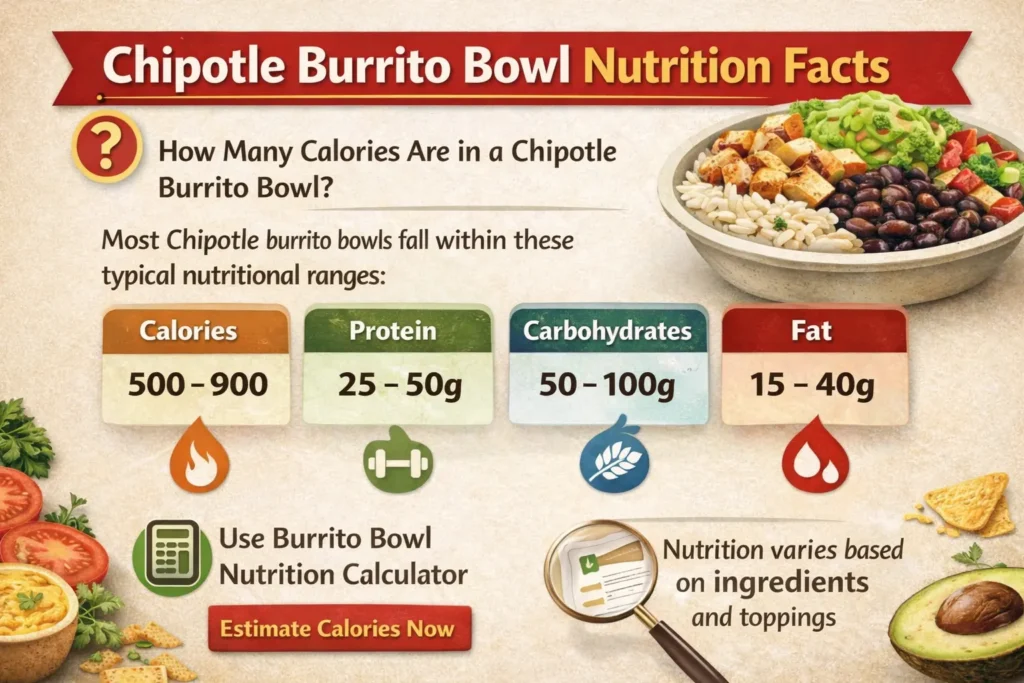
The burrito bowl is usually the go-to choice for people trying to eat clean. No tortilla, right? That’s gotta be better. But here’s the thing: a Chipotle burrito bowl can range anywhere from a light 400-calorie meal to a calorie-packed 1,200+ monster, depending entirely on what you put in it.
So before your next Chipotle run, let’s break it all down: the calories, macros, sodium, protein, and what actually makes a burrito bowl healthy (or not).
What Goes Into a Chipotle Burrito Bowl?
A burrito bowl is basically a build-your-own meal. You pick a base, choose your protein, load up toppings, and add sauces. Every single ingredient affects the nutrition, so let’s go layer by layer.
Here’s a typical burrito bowl build:
- Base: White rice or brown rice (or no rice)
- Beans: Black beans or pinto beans
- Protein: Chicken, steak, barbacoa, carnitas, sofritas, or fajita veggies
- Toppings: Fresh tomato salsa, corn salsa, sour cream, cheese, guacamole, lettuce
Simple concept. But the nutrition can vary wildly.
Chipotle Burrito Bowl Calories: What to Expect
This is the big question most people have: How many calories is a Chipotle burrito bowl?
The honest answer: it depends on your build. Here’s a rough calorie breakdown for each ingredient:
Base:
- White rice (4 oz): ~210 calories
- Brown rice (4 oz): ~210 calories
- No rice: 0 calories
Protein:
- Chicken: ~180 calories
- Steak: ~150 calories
- Carnitas: ~210 calories
- Barbacoa: ~170 calories
- Sofritas (vegan): ~150 calories
- Fajita veggies: ~20 calories
Beans:
- Black beans: ~130 calories
- Pinto beans: ~130 calories
Toppings:
- Fresh tomato salsa: ~25 calories
- Corn salsa: ~80 calories
- Tomatillo-red chili salsa: ~30 calories
- Sour cream: ~110 calories
- Cheese: ~110 calories
- Guacamole: ~230 calories
- Lettuce: ~5 calories
So a classic chicken burrito bowl with white rice, black beans, fresh salsa, and guacamole? You’re looking at roughly 775–800 calories. Add sour cream and cheese? You’re easily crossing the 1,000 mark.
Not terrible for a full meal, but not diet food either.
Full Nutritional Breakdown of a Standard Chipotle Burrito Bowl
Let’s look at a “standard” chicken burrito bowl (chicken, white rice, black beans, fresh salsa, cheese, sour cream, lettuce):
|
Nutrient |
Amount |
|
Calories |
~1,000–1,050 |
|
Total Fat |
~40g |
|
Saturated Fat |
~15g |
|
Carbohydrates |
~100g |
|
Protein |
~50g |
|
Fiber |
~15g |
|
Sodium |
~2,000–2,300mg |
|
Sugar |
~7g |
That sodium number is the one that surprises most people. At 2,000mg+, you’re hitting close to your entire daily sodium limit in one meal. That’s mostly from the rice (cooked with salt and bay leaves), beans, and salsa.
Protein in a Chipotle Burrito Bowl
If you’re someone who tracks protein, this is where Chipotle really shines.
A chicken burrito bowl with double protein (which Chipotle allows for an extra charge) can give you 50–60g of protein in one sitting. That’s elite for a fast-casual meal.
Even a standard single-protein bowl gives you a solid 30–40g depending on your choice.
Best proteins for high protein, lower calories:
- Chicken best protein-to-calorie ratio
- Barbacoa has slightly lower calories, but still good protein
- Sofritas has lower protein (~8g per serving), more carb-heavy
If building muscle or staying full is your goal, chicken or double chicken is the move.
Carbs and Fiber in a Chipotle Burrito Bowl
Here’s where it gets interesting for low-carb folks.
A bowl with white rice and black beans will give you around 90–110g of carbs. That’s a lot, especially if you’re watching your carbohydrate intake.
But, and this is key, a large portion of those carbs come paired with fiber. Black beans alone have 8g of fiber per serving. Brown rice adds more. That fiber slows digestion, keeps you full longer, and helps regulate blood sugar.
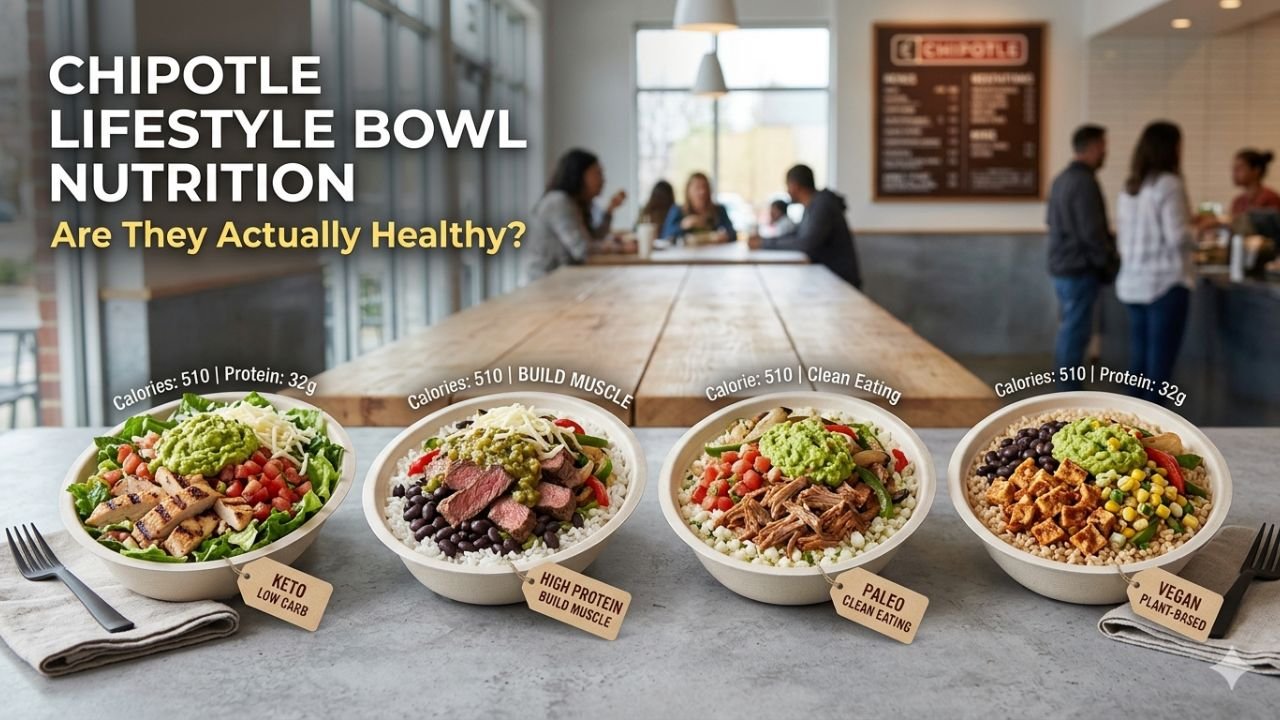
If you’re on a low-carb or keto diet, you can skip the rice and beans entirely. A chicken bowl with fajita veggies, salsa, guacamole, and lettuce drops down to roughly 25–30g of carbs totally manageable.
Fat Content in a Chipotle Burrito Bowl
The fat content is moderate to high, depending on your toppings.
Guacamole is the biggest fat contributor at around 22g of fat per serving, but it’s mostly heart-healthy monounsaturated fat from avocados. That’s the good kind.
Sour cream and cheese are where saturated fat climbs. If you’re watching saturated fat, skip one or both and replace with extra guacamole or salsa.
Low-fat burrito bowl tip: Swap cheese and sour cream for extra salsa and guacamole. You’ll actually get more flavor and better fats.
Is a Chipotle Burrito Bowl Healthy?
This is the million-dollar question, and the answer is: it can be, yes.
Here’s the truth. Chipotle uses real, whole ingredients. There are no artificial preservatives, no fake flavors, and no weird additives. Their chicken is marinated and grilled fresh. The rice is seasoned simply. The guac is made from real avocados daily.
Compared to most fast food options, a well-built Chipotle burrito bowl is genuinely nutritious. But “healthy” depends on how you build it.
Signs your bowl is healthy:
- High protein (30g+)
- Includes fiber from beans or veggies
- Not loaded with sour cream + cheese + corn salsa all at once
- Moderate calorie range (600–900) for your goals
Signs your bowl might be overdoing it:
- Double rice + double beans + guac + cheese + sour cream + corn salsa
- Sodium over 2,500mg
- Calories pushing 1,200+ when your daily target is around that
How to Build a Healthier Chipotle Burrito Bowl
Let’s get practical. Here are some real tips for making your burrito bowl work for your goals:
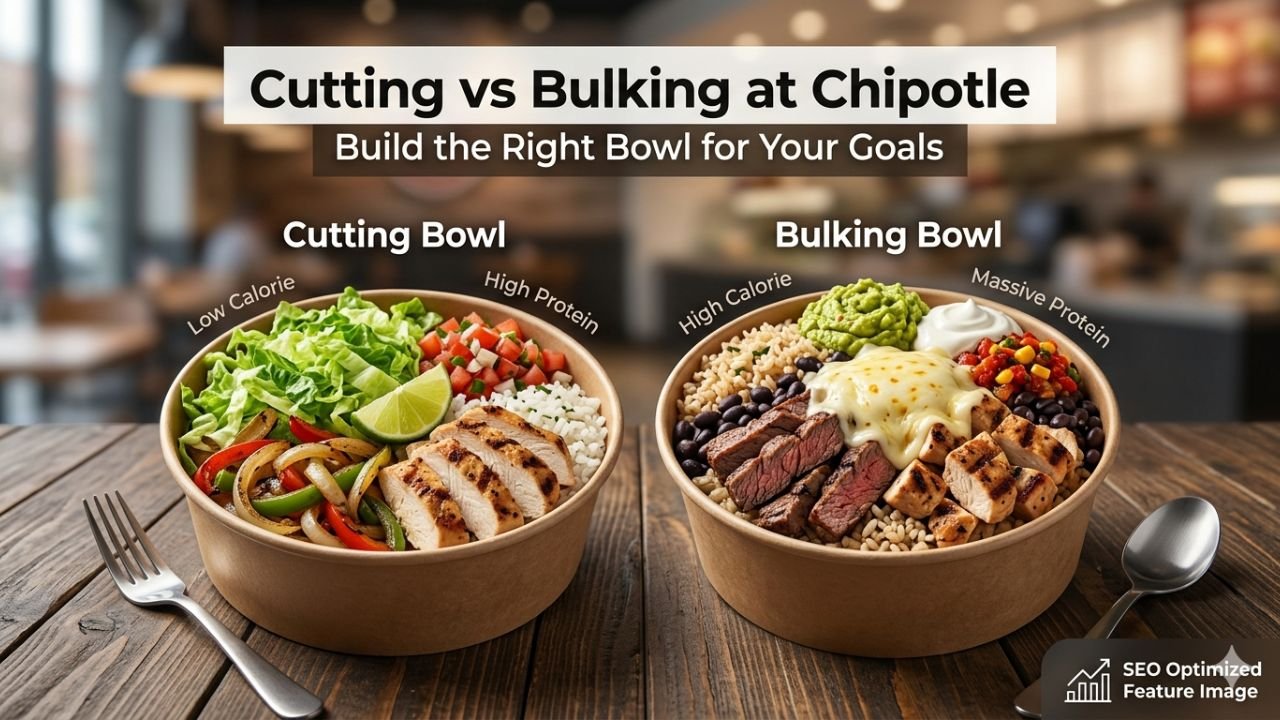
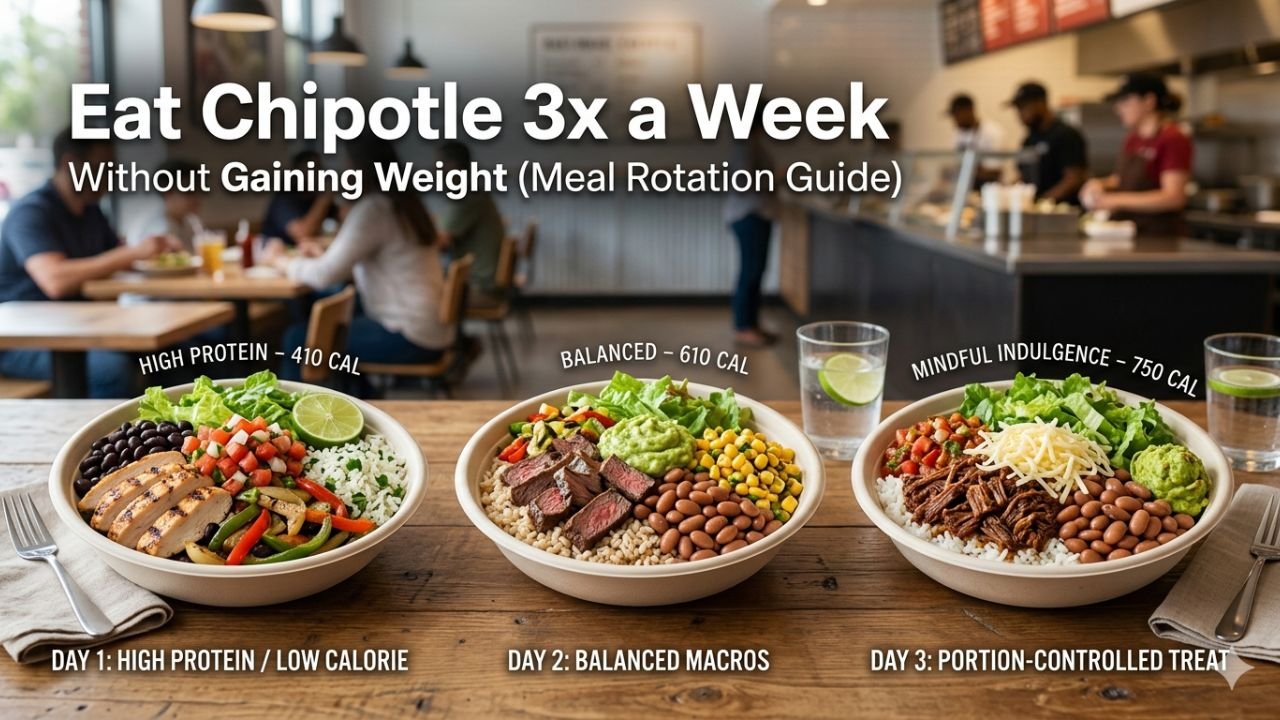
For Weight Loss
- Skip the rice or ask for half rice
- Skip cheese and sour cream
- Load up on fajita veggies and lettuce
- Choose chicken or sofritas for lean protein
- Use fresh tomato salsa instead of corn salsa (fewer calories)
- Add guac if you want healthy fats, it’ll keep you fuller longer
Estimated calories: 450–600
For Muscle Building
- Ask for double chicken
- Add brown rice for complex carbs
- Get black beans for extra protein and fiber
- Add guacamole for healthy fats and calories
- Skip sour cream, keep the cheese
Estimated calories: 800–950 | Protein: 55–65g
For Low-Carb or Keto
- No rice, no beans
- Load up on fajita veggies and lettuce as your base
- Chicken, steak, or carnitas for protein
- Guacamole and sour cream for fats
- Cheese on top
Estimated calories: 550–700 | Carbs: 15–25g
For Vegetarians/Vegans
- Sofritas (spiced tofu) for protein
- Black beans for extra protein
- Brown rice for complex carbs
- Corn salsa, fresh salsa, guac
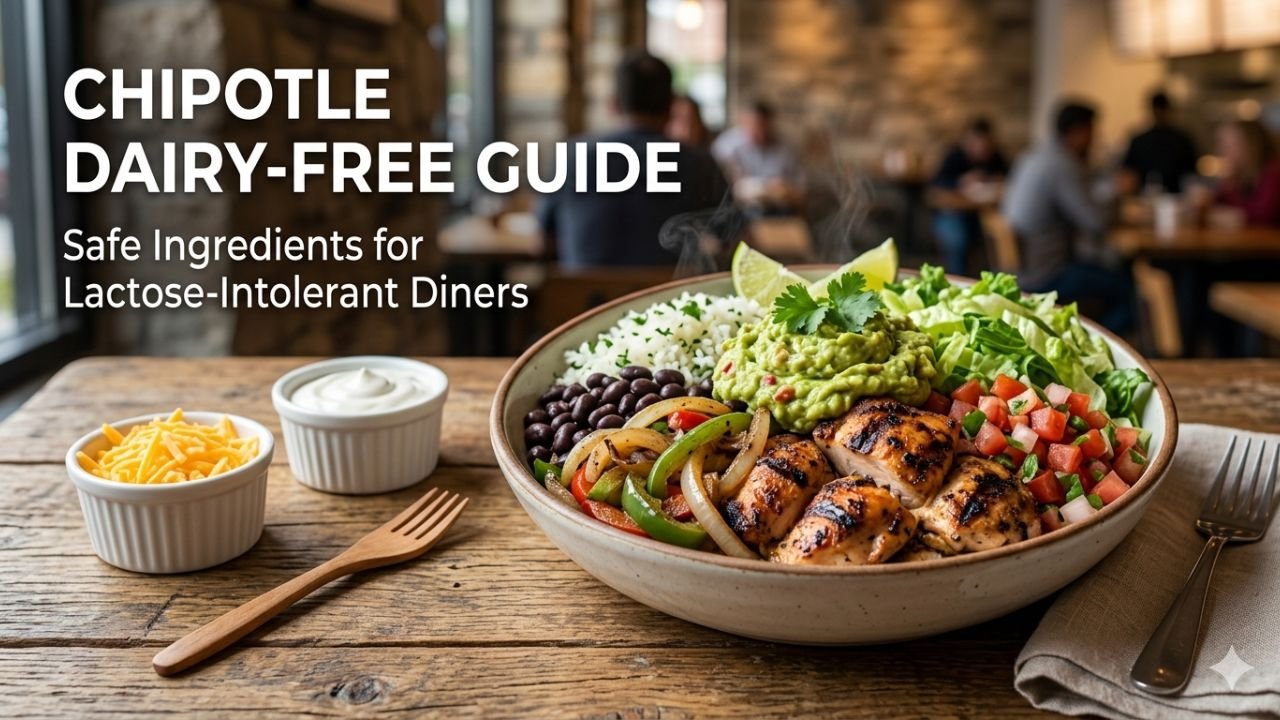
- Skip dairy entirely for a vegan option
Estimated calories: 700–850
The Sodium Problem: What You Should Know
One thing most people don’t realize until it’s too late: Chipotle bowls are very high in sodium.
The cilantro lime rice alone has about 350–400mg of sodium. The beans have around 500mg. The salsas, cheese, and sour cream all add up fast.
A fully loaded bowl can hit 2,400–2,700mg of sodium, which is over your full daily recommended intake in one meal.
If you’re watching sodium for blood pressure or health reasons, here’s how to cut it:
- Ask for rice with no added salt (yes, you can request this)
- Skip corn salsa and stick to fresh tomato salsa
- Limit cheese and sour cream
- Skip the beans or ask for a half portion
- Load up on lettuce, which adds basically no sodium
You can bring a high-sodium bowl down to under 1,500mg with a few smart swaps.
Chipotle Burrito Bowl vs. Burrito: Which Is Better?
A lot of people switch to a bowl, thinking they’re saving a ton of calories by skipping the tortilla.
Here’s the math: A large flour tortilla at Chipotle is about 320 calories and adds 50g of carbs. So yes, swapping a burrito for a bowl saves you significant calories and refined carbs, especially if you’re already getting rice inside.
The bowl is almost always the better nutritional choice unless you’re intentionally eating for more calories.
Frequently Asked Questions
How many calories are in a Chipotle chicken burrito bowl?
A standard chicken burrito bowl with rice, beans, salsa, cheese, and sour cream contains approximately 1,000–1,050 calories. You can bring this down to 600–700 by skipping cheese, sour cream, and going lighter on rice.
Is a Chipotle burrito bowl good for weight loss?
Yes, it can be. A bowl built with chicken, light rice or no rice, black beans, fresh salsa, and guacamole sits around 600–700 calories with high protein, which is solid for a weight-loss meal. The key is avoiding the calorie-heavy additions like double cheese and sour cream.
How much protein is in a Chipotle burrito bowl?
A standard chicken burrito bowl gives you around 35–45g of protein. With double chicken, you can push that up to 55–65g, making it one of the highest-protein fast-casual options available.
Is the Chipotle burrito bowl high in sodium?
Yes. Most fully loaded bowls range from 2,000–2,700mg of sodium, which is at or above the daily recommended limit. You can reduce sodium by requesting less salted rice, limiting sauces, and keeping toppings simple.
What is the healthiest Chipotle burrito bowl option?
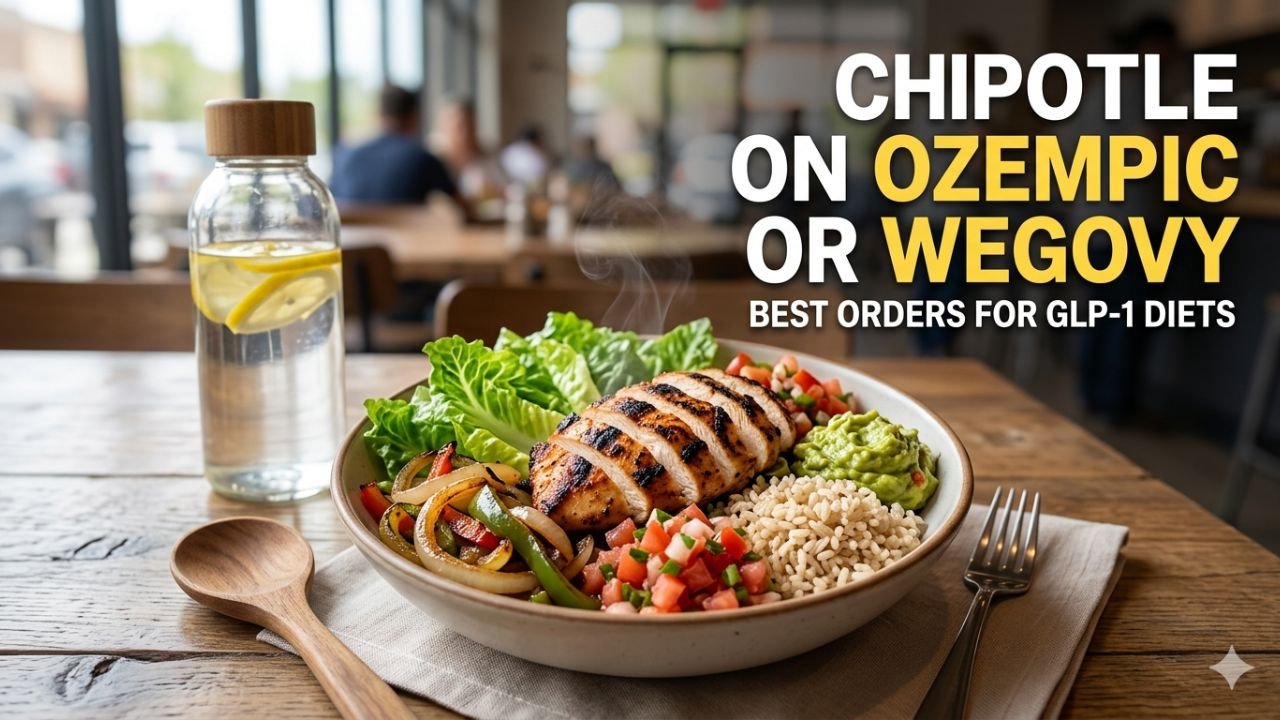
The healthiest build is: chicken (or double chicken), skip or half rice, black beans, fresh tomato salsa, guacamole, and lettuce. This gives you high protein, healthy fats, fiber, and keeps calories in a reasonable range around 600–750.
Conclusion
A Chipotle burrito bowl is genuinely one of the better fast-casual options out there, but only if you build it with intention.
The good news? The ingredients are real and whole. The protein options are excellent. And you have full control over every single component of your meal. Not many restaurant chains give you that level of transparency.
Whether you’re trying to lose weight, hit your protein goals, eat low-carb, or enjoy a solid meal, there’s a burrito bowl build that works for you. The key is knowing your numbers and making choices that align with your goals.
So next time you’re in that Chipotle line, you won’t have to guess. You’ll know exactly what you’re ordering and why.