You’re standing in line at Chipotle. The smell of grilled peppers and warm tortillas is doing things to your brain. You’re trying to be good today, you really are. You’ve got your order planned out, your bowl or burrito ready to go in your head.
And then the server asks: “What protein?”
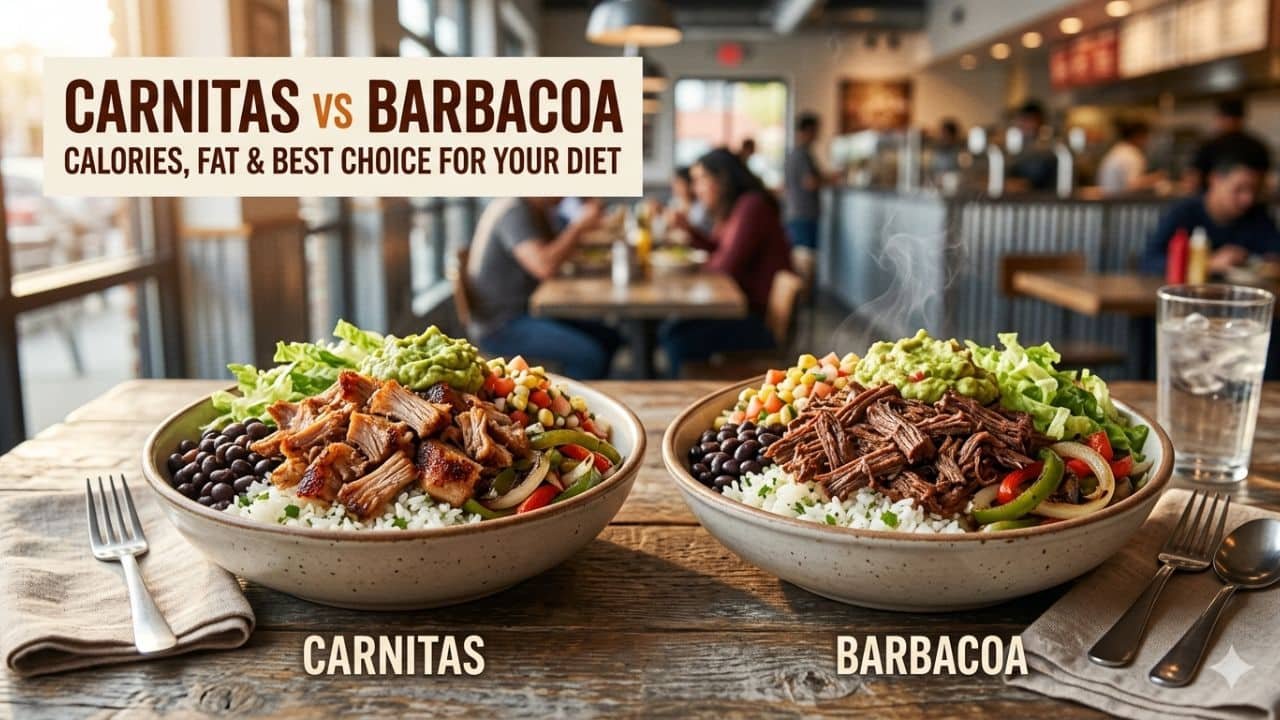
You freeze. Carnitas vs barbacoa. Both sound amazing. Both smell incredible. But which one is actually better for your diet goals?
If you’ve ever stood there doing mental math while a line of hungry people formed behind you, this post is for you. We’re breaking down Chipotle carnitas vs barbacoa, the calories, the fat, the protein, and which one actually makes more sense depending on what you’re trying to do with your body.
Let’s get into it.
What Even Are Carnitas and Barbacoa?
Before we start comparing numbers, let’s talk about what these two proteins actually are. Because knowing what you’re eating matters just as much as the nutrition label.
Carnitas: The Slow-Cooked Pork
Carnitas is a Mexican classic. The word literally means “little meats” in Spanish. At Chipotle, carnitas is made from pork that’s been braised and simmered until it’s fall-apart tender. It’s got that slightly crispy exterior on some bites with juicy, soft pork on the inside.
The seasoning is simple:e juniper berries, thyme, and bay leaves. Nothing crazy. It’s clean, savory, and honestly one of the most satisfying proteins on the menu.
Barbacoa: The Spiced-Up Beef
Barbacoa is a different animal entirely, literally. It’s beef, slow-braised with chipotle peppers, cumin, cloves, and oregano. The result is rich, smoky, slightly spicy shredded beef that’s bold in every bite.
Traditionally, barbacoa is made from tougher cuts like chuck roast or beef cheeks that need low, slow cooking to become tender. Chipotle uses beef that’s been marinated and braised to that melt-in-your-mouth texture.
Chipotle Carnitas vs Barbacoa: The Nutrition Breakdown
Okay, here’s what most people actually want to know. Let’s look at the numbers side by side. These are approximate values based on a standard 4 oz serving at Chipotle.
Carnitas Nutrition (Per Serving ~4 oz)
- Calories: 210
- Total Fat: 12g
- Saturated Fat: 4g
- Protein: 23g
- Sodium: 430mg
- Carbohydrates: 0g
Barbacoa Nutrition (Per Serving ~4 oz)
- Calories: 170
- Total Fat: 7g
- Saturated Fat: 2.5g
- Protein: 24g
- Sodium: 530mg
- Carbohydrates: 2g
So right away, some things stand out. Barbacoa has fewer calories and significantly less fat. But carnitas is pretty close in protein. The sodium situation flips,s though barbacoa has more salt, which matters if you’re watching that.
Neither one is bad. But they’re clearly different, and those differences matter depending on your goals.
Calories: Which One Is Lower?
If you’re counting calories, barbacoa wins. It has about 40 fewer calories per serving than carnitas. That might not sound like much, but it adds up, especially if Chipotle is part of your regular weekly routine.
Think about it this way. If you eat Chipotle twice a week and you always get carnitas, switching to barbacoa would save you roughly 80 calories per week. Over a month, that’s 320 calories. Over a year? That’s close to 4,000 calories, the equivalent of more than a pound of fat, just from one protein swap.
That’s nothing.
Practical Tip: Calorie Context Matters
If you’re building a bowl with brown rice, black beans, fajita veggies, salsa, and a little cheese, your total meal is probably sitting around 700-900 calories, regardless of which protein you pick. The bigger calorie decisions are usually whether you get guacamole, sour cream, or a tortilla.
So yes, barbacoa is lower in calories,s but don’t obsess over the 40-calorie difference while dumping on an extra scoop of guac.
Fat Content: Carnitas vs Barbacoa
This is where the difference becomes more significant. Carnitas has 12g of fat per serving. Barbacoa has 7g. That’s a notable gap of about 5 grams.
Carnitas is pork, and pork naturally carries more fat than lean beef. The way Chipotle prepares it adds to that richness. It’s part of what makes it taste so good, honestly. That fat = flavor equation is very real.
Barbacoa’s beef cut is leaner by comparison, and the preparation keeps it that way. Lower fat means it feels “lighter” even though it’s still deeply flavorful thanks to all those spices.
Who Should Care About This?
- If you’re on a lower-fat diet, barbacoa is the better pick
- If you’re doing keto or a higher-fat approach, carnitas fit more naturally
- If you have heart health concerns and your doctor has mentioned saturated fat, barbacoa wins again with lower saturated fat (2.5g vs 4g)
Protein: Which One Builds More Muscle?
Here’s the fun part for fitness people. When it comes to protein, carnitas and barbacoa are basically tied.
Carnitas delivers around 23g of protein per serving. Barbacoa comes in at about 24g. We’re talking a 1-gram difference. For all practical purposes, they’re equal.
Both are solid, complete protein sources. Both contain all the essential amino acids your body needs. Both will support muscle repair, recovery, and growth when paired with a workout routine.
So if you’re hitting the gym and your main goal is protein intake, don’t stress about which one you pick. Just make sure you’re actually eating enough of it.
Pro Tip for High-Protein Meals
Want to maximize protein at Chipotle without going overboard on calories?
- Ask for a double portion of protein, which roughly doubles your protein intake for the cost of an add-on.
- Pair with black beans for extra plant-based protein
- Skip the cheese and sour cream if you’re trying to keep fat down while keeping protein up
- Choose a bowl over a burrito to ditch the high-carb tortilla
Sodium: The Often-Ignored Factor
Nobody talks about sodium, but they should. Especially if you’re eating Chipotle regularly.
Carnitas has around 430mg of sodium per serving. Barbacoa has around 530mg. That’s a noticeable difference, 100mg more per serving in the barbacoa.
For reference, the general recommendation is to stay under 2,300mg of sodium per day. One serving of barbacoa uses up about 23% of that daily limit before you’ve added rice, beans, salsa, or cheese. A full Chipotle bowl can easily top 1,000mg of sodium if you’re not paying attention.
If you’re managing blood pressure or just trying to reduce sodium, carnitas actually comes out ahead here. It tastes rich and satisfying with much less salt.
Flavor Profile: Because Taste Matters Too
Nutrition aside, you have to actually enjoy your food. Life’s too short to eat things that make you sad.
Carnitas tastes mild, rich, and porky. It pairs beautifully with bright toppings like fresh tomato salsa, corn salsa, and citrus notes. If you’re someone who likes to build flavors yourself through toppings, carnitas is a great canvas.
Barbacoa arrives already seasoned to the max. It’s smoky, earthy, spicy, and complex. You get a full flavor experience even with minimal toppings. If you like bold food that punches you in the taste buds in the best way, barbacoa is your friend.
Real talk, if you like spice, barbacoa is almost always more satisfying. If you prefer something more subtle and comfort-food-like, carnitas wins.
Which Protein Is Better for Your Specific Diet Goal?
Let’s make this super practical. Here’s a quick guide based on different goals:
For Weight Loss
Go with barbacoa. Lower calories, lower fat, same protein. It helps you stay in a calorie deficit without sacrificing fullness or satisfaction.
For Muscle Building
Honestly, either works. Both are excellent protein sources. Pick based on how they fit your daily calorie and macro targets. If you need more calories because you’re bulking, carnitas helps with that.
For Keto or Low-Carb
Both are essentially zero to low carb. Carnitas has slightly more fat, which can help hit your fat macros on keto. Either works well, but carnitas might feel more naturally keto-friendly.
For Heart Health
Barbacoa edges ahead here with lower saturated fat. But the sodium is higher, so it’s a trade-off. Talk to your doctor or dietitian if this is a medical concern.
For General Healthy Eating
You really can’t go wrong with either. Both are whole-food, minimally processed protein options. Focus more on what you put around the protein,n heavy on veggies, easy on sour cream, watch the extras.
What Dietitians Actually Say About Chipotle
Nutritionists and registered dietitians are generally fans of Chipotle compared to most fast food options. The ingredients are relatively clean, there’s lots of customization, and you can build a genuinely balanced meal there.
The biggest advice dietitians tend to give? Watch out for the add-ons. A scoop of guacamole adds about 230 calories. Sour cream adds another 110. Cheese chips in with 110 more. It’s easy to build a “healthy” bowl that sneaks past 1,200 calories without realizing it.
Frequently Asked Questions
Is barbacoa healthier than carnitas at Chipotle?
In terms of calories and fat, yes, barbacoa is the leaner option. It has about 40 fewer calories and 5 fewer grams of fat per serving. However, barbacoa has more sodium. “Healthier” depends on what your body specifically needs, but for general weight management, barbacoa has a slight edge.
Which has more protein, carnitas or barbacoa?
They’re almost identical. Barbacoa has about 24g of protein per serving, and carnitas has about 23g. Both are excellent high-protein options that will support your fitness and dietary goals equally well.
Can I eat Chipotle carnitas or barbacoa on a diet?
Absolutely. Both proteins are solid diet-friendly choices. The key is building the rest of your bowl mindfully. Stick to a bowl (not a burrito), load up on fajita veggies, choose one salsa, and go light or skip the high-calorie extras like guacamole and sour cream if you’re keeping calories in check.
Which is better for keto carnitas or barbacoa?
Both work for keto since neither has significant carbs. Carnitas has more fat, which can help you hit ketogenic macro targets more easily. That said, barbacoa’s bold flavors make it satisfying without needing fatty toppings, so it can work just as well depending on how you build your meal.
Why does barbacoa taste spicier than carnitas?
Barbacoa is made with chipotle peppers, cumin, cloves, and black pepper a spice blend that creates a smoky, earthy heat. Carnitas uses milder seasonings like thyme, bay leaves, and juniper berries, resulting in a more subtle, savory flavor. If you prefer less heat, carnitas is the safer choice.
Conclusion
Here’s the truth: there’s no universally “better” protein between Chipotle carnitas vs barbacoa. It genuinely depends on you.
If you want fewer calories and less fat, barbacoa is your move. If you prefer lower sodium or a richer, pork-based comfort food, carnitas delivers. If you’re just trying to hit your protein goals, flip a coin, because they’re basically equal.
What matters most isn’t agonizing over 40 calories or 5 grams of fat. What matters is building a meal that you actually enjoy, that fits your lifestyle, and that keeps you coming back to smart eating habits consistently.
Both proteins are real food, thoughtfully prepared, and genuinely nutritious. In the world of fast food, that already puts them miles ahead of most options.
So next time you’re standing at that counter, don’t freeze up. Know your goal, make your choice, and enjoy every bite. You’ve earned it.