Let me paint you a picture. It’s lunch. You’ve been hitting the gym hard, you’re trying to eat clean, and you don’t have the time (or honestly, the desire) to meal prep again. You pull up to Chipotle, stare at the menu board, and think okay, how do I make this actually work for my macros?
We’ve all been there.
The good news? Chipotle is genuinely one of the best fast-food options for high-protein eating. You’re not just limited to sad salads and water. With the right build, you can walk out with a bowl that packs over 70 grams of protein, sometimes closer to 80 or even 90, without blowing your calorie budget.
And in this post, I’m going to break down the exact highest-protein Chipotle bowl you can build, ingredient by ingredient, with real macros so you know exactly what you’re eating.
Let’s get into it.
Why Chipotle Actually Works for High-Protein Diets
Before we build the bowl, let’s talk about why Chipotle is a solid choice in the first place.
Most fast food provides calories with little nutritional value: empty carbs, low-quality fats, and barely enough protein to matter. Chipotle is different because:
- You control every ingredient. Nothing is hidden or pre-mixed.
- Their proteins are real, whole food, not processed patties or mystery meat.
- You can customize portions. Ask nicely (or ask directly), and you can often get a double scoop.
- The macros are publicly available. Chipotle’s website actually lists exact nutrition info for every single item.
This makes it one of the most macro-friendly fast food spots out there if you know how to use it.
The Highest Protein Chipotle Bowl: The Full Build
Alright, here’s where it gets fun. This is the bowl I’ve personally tested and tracked. Every ingredient is chosen to maximize protein while keeping the meal balanced and actually enjoyable to eat.
Base: Skip the Rice or Go Half
Here’s an honest take: Rice doesn’t add protein. It adds carbs and calories, which is fine if you need the fuel, but if you’re purely chasing protein per calorie, go easy on the rice or skip it entirely.
Option A: No rice (saves ~210 calories, no protein impact). Option B: Half portion of white or brown rice (around 130 calories, 2g protein)
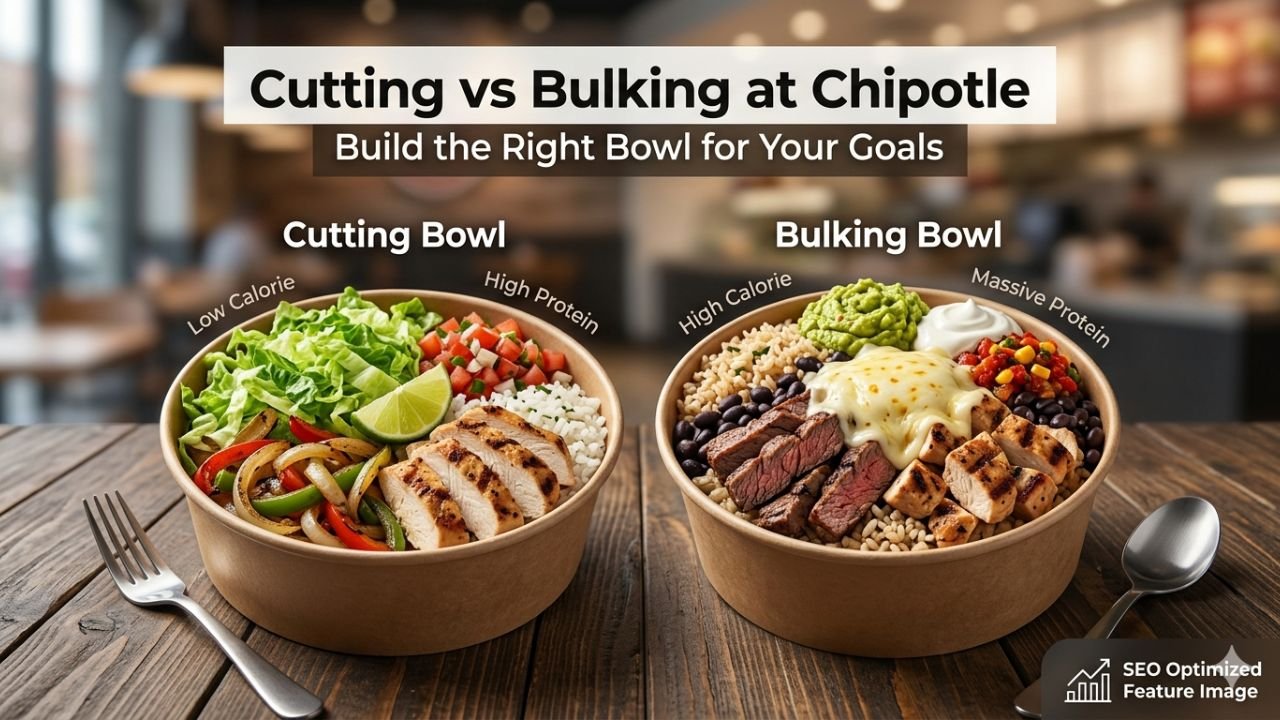
If you’re bulking or need the carbs for energy, keep the rice. If you’re cutting, skip it or go half.
Beans: Black Beans for the Win
Both black beans and pinto beans are solid, but black beans edge out pinto beans slightly in protein content.
Black beans (full portion): ~130 calories, 8g protein
Beans also give you fiber, which keeps you full longer. Don’t skip them just to save calories; they’re earning their place here.
The MVP: Double Protein
This is the most important decision you’ll make at the counter.
Chipotle charges a small upcharge (usually around $2–$3) for double protein, and it is absolutely worth every penny when you’re hitting your macros. Here’s a breakdown of your best protein options:
|
Protein |
Single Serving |
Double Serving |
|
Chicken (grilled) |
~32g |
~64g |
|
Steak |
~30g |
~60g |
|
Barbacoa |
~32g |
~64g |
|
Sofritas (vegan) |
~8g |
~16g |
|
Carnitas |
~32g |
~64g |
Highest protein pick: Double grilled chicken or double barbacoa
Both land at roughly 64g of protein for a double serving, and they’re lower in fat compared to carnitas or steak, making them the leanest, highest-protein choices on the menu.
Pro tip: Ask for a “double scoop” when you order. Most of the time, the person behind the counter will give you a generous portion. Be friendly about it; it works.
Fajita Veggies: Always Yes
The sautéed bell peppers and onions add flavor, volume, and micronutrients for barely any calories (~20 calories, 1g protein). Always add them. They make the bowl feel more substantial and add a nice smoky sweetness.
Salsa: The Free Protein Bonus
This one surprises people. Salsa is practically a free food, very low in calories, no fat, and it adds moisture and flavor, so you need less of the heavy stuff.
- Fresh tomato salsa (pico de gallo): 25 calories, 1g protein
- Tomatillo green chili salsa: 15 calories, 0g protein
- Tomatillo red chili salsa: 30 calories, 1g protein
- Corn salsa: 80 calories, 2g protein
Go with pico de gallo plus one of the green or red salsas. You get flavor and a little extra protein without adding much to your calorie count.
Cheese: A Little Goes a Long Way
Cheese adds protein, but also saturated fat and calories. A standard serving of shredded cheese at Chipotle is about:
110 calories, 6g protein, 9g fat
If you’re cutting, skip it or ask for a light sprinkle. If you’re bulking, keep that extra 6g of protein; it’s useful, and cheese makes everything taste better.
Sour Cream: Skip It (Usually)
Sour cream adds very little protein for the calories it costs.
120 calories, 2g protein, 10g fat
Honestly, skip the sour cream and use the calories elsewhere (like that double protein). Your macros will thank you.
Guacamole: It Depends on Your Goals
Guacamole is calorie-dense (~230 calories per serving), but it’s mostly healthy fats. Protein-wise, it adds almost nothing (2g).
- Bulking? Adding healthy fats is useful.
- Cutting? Skip it or get a side half-scoop.
The Full Macro Breakdown: Exact Numbers
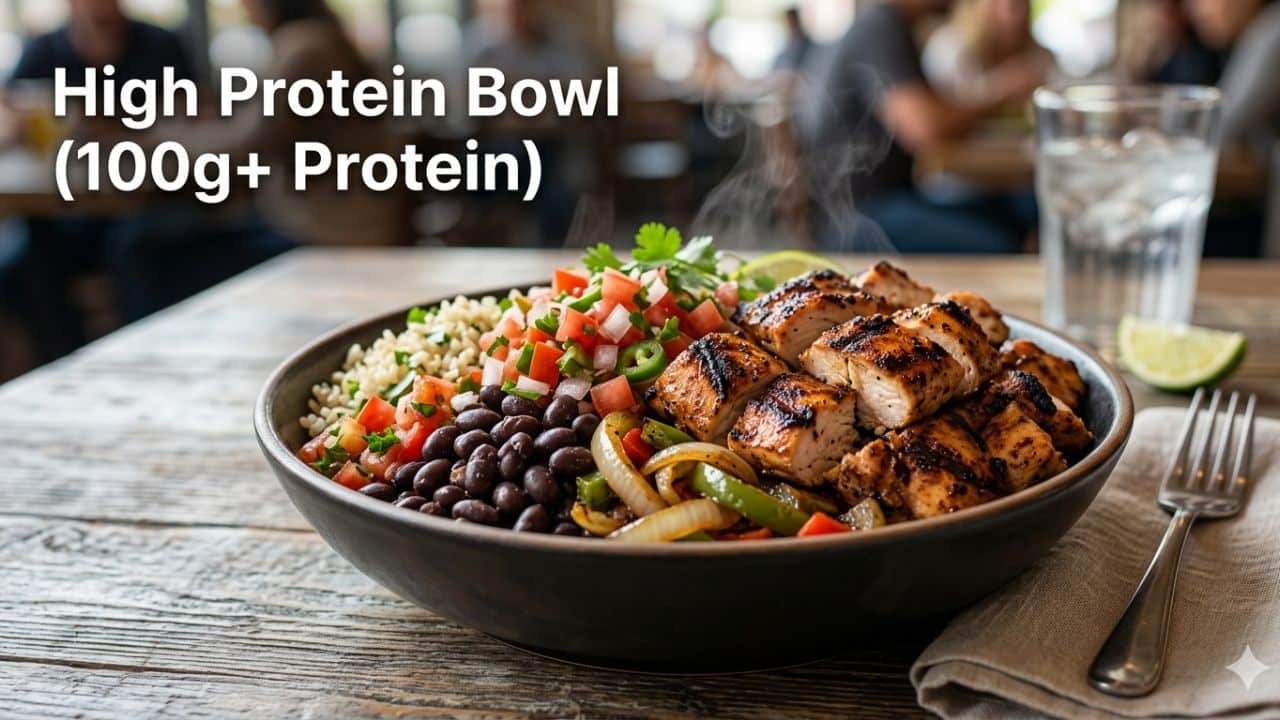
Here’s the full highest-protein Chipotle bowl with the exact macros:
The Build:
- No rice (or half portion of white rice)
- Black beans (full scoop)
- Double grilled chicken
- Fajita veggies
- Pico de gallo + green tomatillo salsa
- Shredded cheese (standard serving)
- No sour cream, no guacamole
The Macros (no rice version):
|
Macro |
Amount |
|
Calories |
~690 |
|
Protein |
~79g |
|
Carbohydrates |
~30g |
|
Fat |
~22g |
The Macros (with half rice portion):
|
Macro |
Amount |
|
Calories |
~820 |
|
Protein |
~81g |
|
Carbohydrates |
~58g |
|
Fat |
~22g |
That’s a legitimately high-protein meal that you ordered at a fast food counter in about 90 seconds. Not bad at all.
Practical Tips for Maximizing Your Chipotle Protein Bowl
Let’s go a little deeper with some real-world tips that make a difference.
- Use Chipotle’s nutrition calculator before you go. The official Chipotle website has a meal builder where you can drag and drop ingredients and see the exact macros update in real time. Spend five minutes with it before you order, a nd you’ll know exactly what you’re getting.
- Ask for extra meat politely and specifically. There’s a difference between asking “Can I get more chicken?” and saying “Can I get a double portion of chicken?” The second one is clearer and more likely to get you what you want. Be direct and friendly.
- Order a bowl over a burrito. A burrito wrap adds about 320 calories and only 8–9g of protein. If you’re tracking macros, the bowl is almost always the better move.
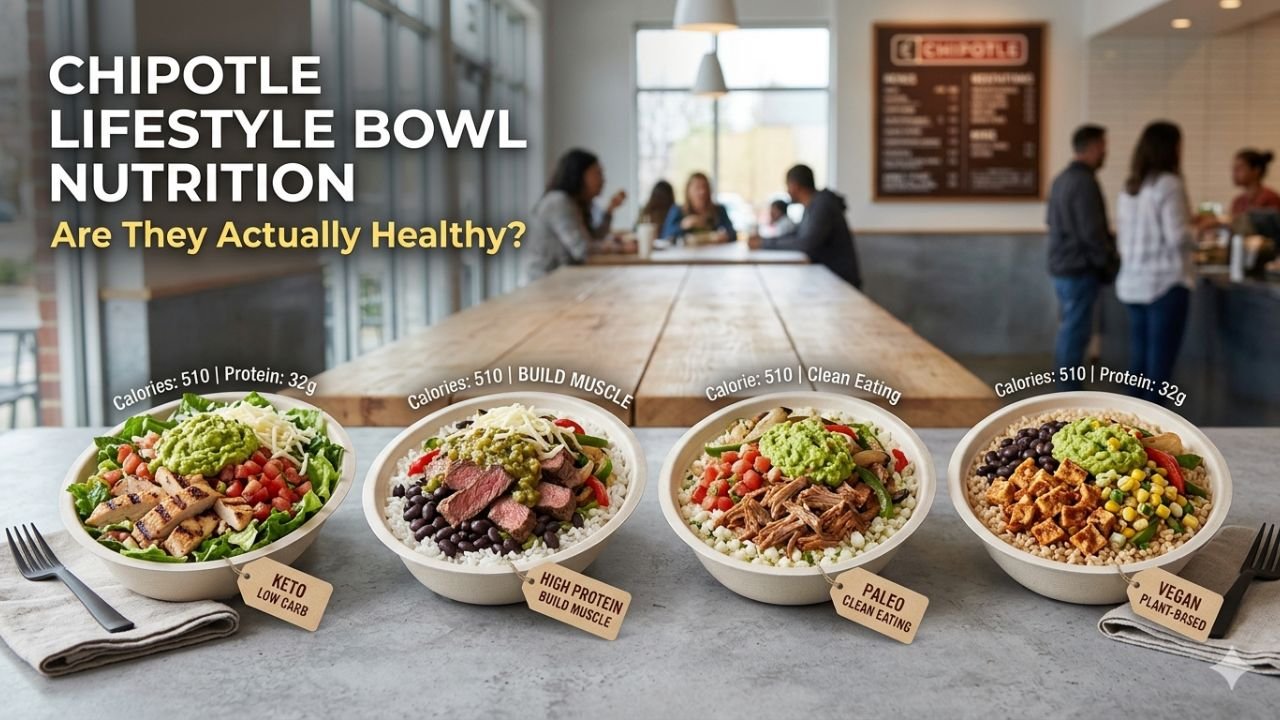
- The “lifestyle bowl” hack. Chipotle actually offers lifestyle bowls on its app, including a high-protein option. You can order these directly and modify them. It’s a quick way to get a solid starting point.
- Watch the sneaky calorie additions. Guacamole (+230 cal), sour cream (+120 cal), and white rice (+210 cal) can quickly turn your lean protein bowl into a meal that adds 500+ calories with little protein. Know what each topping costs before you add it.
Real Life Example: A Day of Eating Around Your Chipotle Bowl
Let’s say your daily protein goal is 160g and your calorie target is 2,200 calories. Here’s how a Chipotle high-protein bowl fits into a full day:
- Breakfast: Greek yogurt with berries and a scoop of protein powder — ~45g protein, ~400 calories
- Lunch: High-protein Chipotle bowl (as above, no rice) — ~79g protein, ~690 calories
- Snack: Handful of almonds + string cheese — ~10g protein, ~250 calories
- Dinner: Grilled salmon with vegetables — ~40g protein, ~500 calories
- Evening: Cottage cheese — ~14g protein, ~160 calories
Total: ~188g protein, ~2,000 calories
You hit your protein goal. You enjoyed Chipotle for lunch. And you didn’t spend hours in the kitchen. That’s the kind of flexibility high-protein eating should have.
Frequently Asked Questions
What is the highest protein item at Chipotle?
Grilled chicken and barbacoa are tied for the highest protein per serving at Chipotle, each delivering around 32g per single serving. Getting a double portion of either one gives you approximately 64g of protein from the meat alone.
How much does a double protein cost at Chipotle?
The upcharge for double protein is typically around $2.50–$3.50, depending on your location and the protein you choose. Steak tends to be on the higher end, while chicken is usually the most affordable double option.
Is a Chipotle bowl actually healthy?
It absolutely can be. When you build it intentionally, lean protein, beans, veggies, and light on the high-calorie toppings, a Chipotle bowl is a genuinely nutritious, balanced meal. The key is being deliberate about what goes in it.
Can I get 100 grams of protein at Chipotle?
Yes, technically. A triple protein order (if they allow it at your location) combined with beans and cheese, could push you close to or over 100g of protein. However, most locations cap at double protein, so 75–85g is more realistic for a single bowl.
Is brown rice or white rice better for a protein bowl?
Nutritionally, brown rice has slightly more fiber and a lower glycemic index than white rice. For a protein-focused bowl, either one works, but if you’re going to add rice, brown rice is the marginally better choice for steady energy and satiety.
Conclusion
Here’s the bottom line: Chipotle isn’t just fast food. In the right hands, it’s a legitimate tool for hitting your protein goals, eating real food, and not spending your entire Sunday doing meal prep.
The highest protein Chipotle bowl you can build, double grilled chicken, black beans, fajita veggies, salsa, and a sprinkle of cheese, delivers around 79–81 grams of protein for roughly 690–820 calories. That’s a meal most home-cooked options can’t beat for convenience.
So next time you’re standing in line, staring at the menu, don’t stress. You know exactly what to order now.
Build your bowl with intention. Track it if you need to. And enjoy every single bite because eating for your goals doesn’t have to be miserable, complicated, or joyless.
Now go get that double chicken. You’ve earned it.